

13 Jul How to Relocate Your Pet During an International Move from Mexico: Permits, Requirements, and Essential Care
Moving abroad with your pet takes more than an extra suitcase
When a family decides to start a new chapter in another country, their pet is part of the plan. But relocating a pet during an international move from Mexico involves a logistical and documentary process that goes well beyond booking a spot on a plane. Health permits, veterinary certificates, quarantine requirements, and country-specific regulations are just some of the variables that need to be managed in advance and with precision.
With over 75 years of experience in domestic and international relocation, IMS Movers guides our clients through every detail of this process — including the safe transport of the most beloved members of the family.
Essential documentation for internationally relocating your pet from Mexico
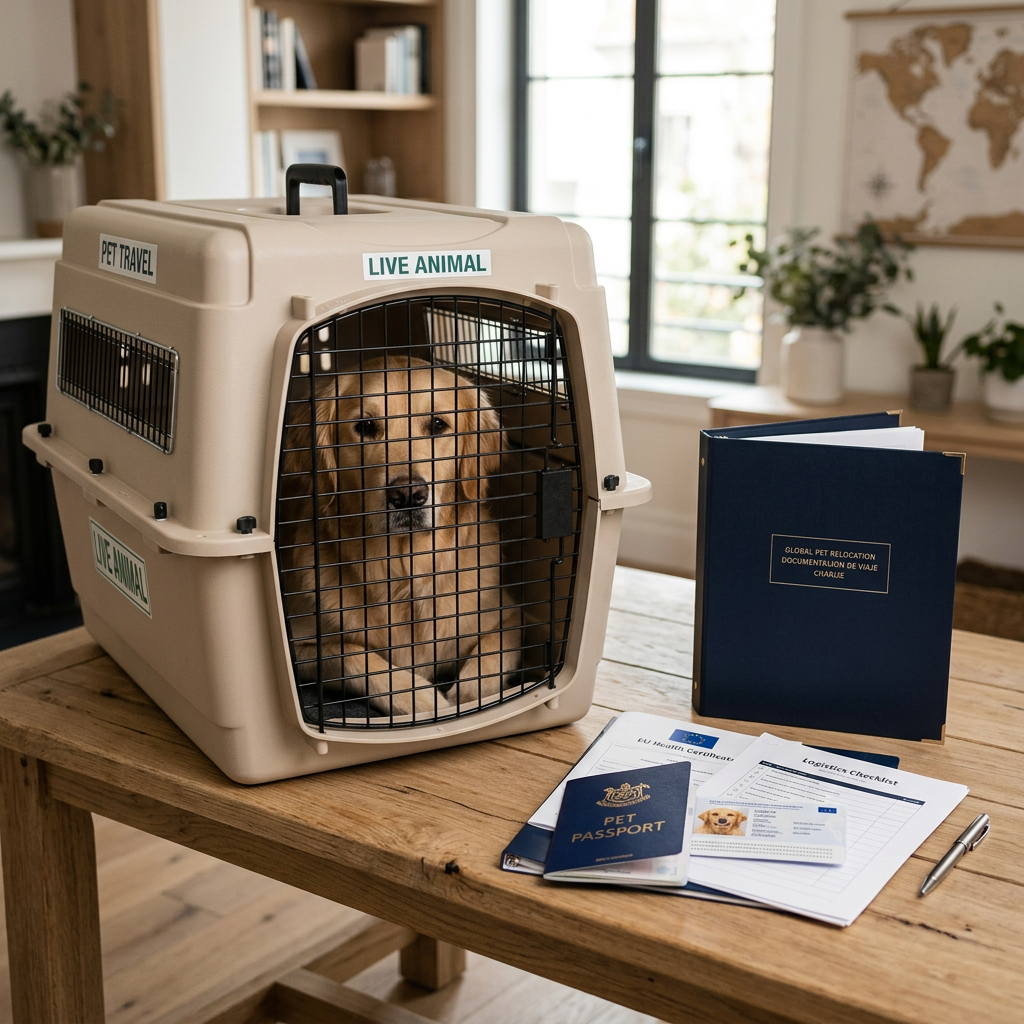
The first step is understanding that every destination country has its own requirements for bringing animals across the border. That said, there are core documents that virtually all of them require:
- Official veterinary health certificate: issued by a certified veterinarian and endorsed by SENASICA (Mexico’s National Service for Agri-Food Health, Safety, and Quality). In most cases, it must be issued no more than 10 days before travel.
- Valid rabies vaccination: mandatory for almost every international destination. Be sure to verify the minimum vaccination window required by the receiving country before your travel date.
- Microchip identification (ISO 11784/11785): required as permanent identification in the European Union, United Kingdom, Canada, and many other destinations.
- Rabies Neutralizing Antibody Titer Test (RNATT): required by countries with strict biosecurity protocols such as Japan, Australia, New Zealand, and parts of Europe. This test may need to be completed up to 180 days in advance.
- Antiparasitic treatments: for fleas, ticks, and helminths, with specific products and dates depending on your destination.
- Import permit: some countries require this before the animal enters the country.
Managing this documentation can be complex. A single error in dates, signatures, or stamps can result in your pet being detained or even turned away at the border. That’s why having a team that specializes in customs management and international logistics makes a real difference.
Country-specific requirements: what to research before getting a moving quote
There’s no single universal standard. Requirements vary significantly depending on your destination. Here are a few illustrative examples:
- United States: requires a valid rabies vaccine and health certificate. As of August 2024, the CDC introduced new regulations for dogs that have been in Mexico — it’s essential to verify current rules at the time of your move.
- European Union: requires a microchip, rabies vaccine, official veterinary certificate, and in some cases, an RNATT. A European pet passport may also be necessary.
- Canada: requires a health certificate and rabies vaccination. Requirements for cats are more flexible but still vary by species.
- Australia and New Zealand: have the strictest protocols in the world. Mandatory quarantine, RNATT, specific treatments, and waiting periods of up to six months are standard.
- Latin America: requirements are generally less restrictive, but they are still mandatory and must be coordinated with the relevant health authorities.
For destinations with the most demanding health requirements, starting this process at least three to six months before your move date is a wise recommendation.
Essential care for your pet’s well-being during the move
Choosing the right transport method
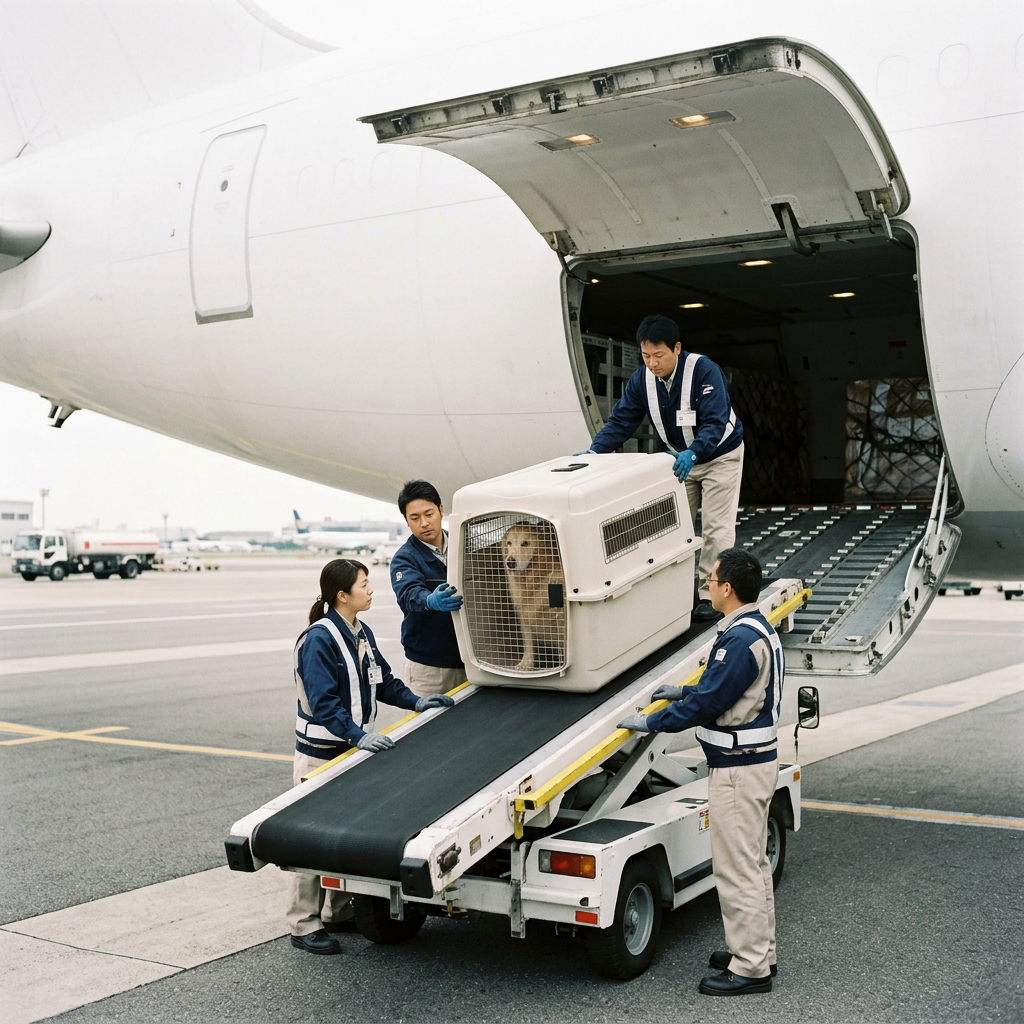
Depending on your pet’s size, species, and destination, they may travel in the cabin, in the aircraft hold, or via specialized cargo services. For long trips or large animals, air freight with professional handling is usually the most appropriate option. In some cases, a multimodal route — combining ground and air transport — may be the most efficient solution.
The right carrier
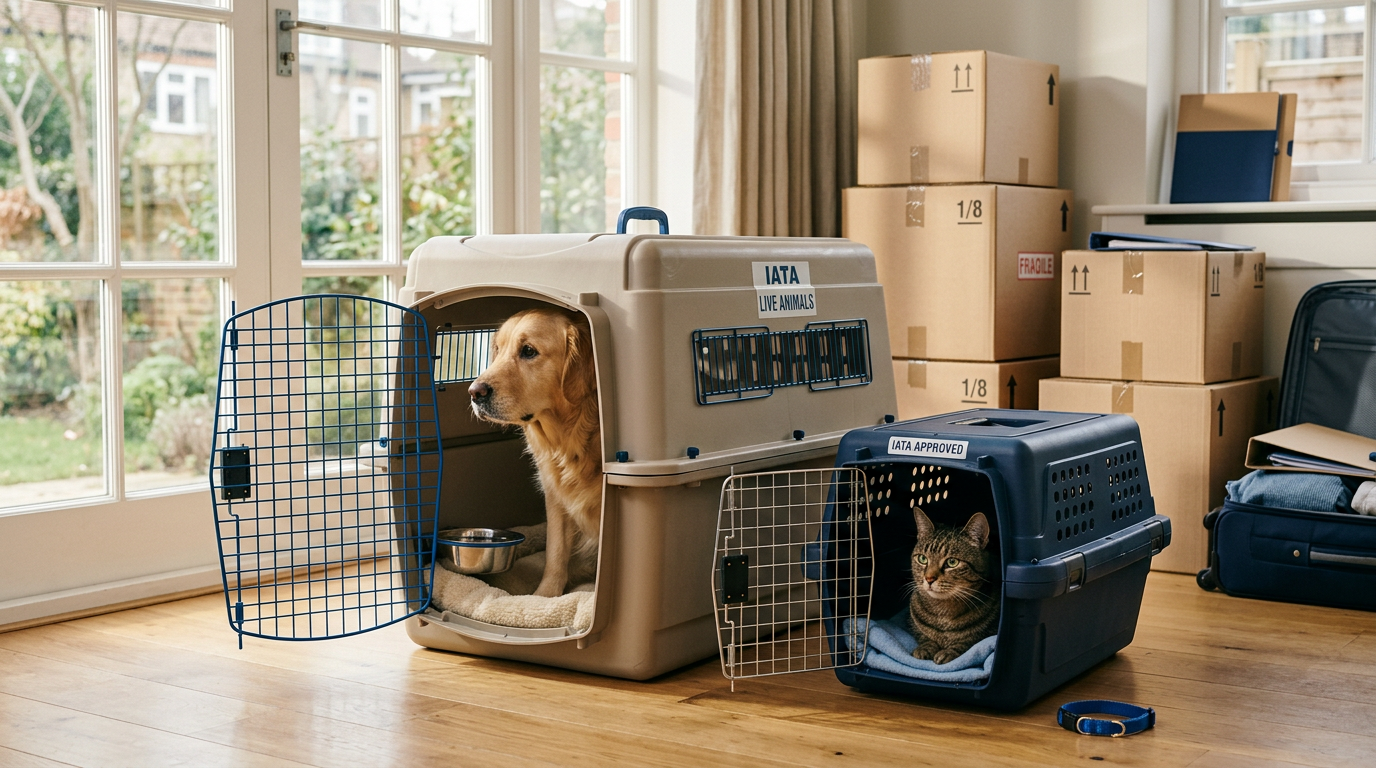
It must comply with IATA (International Air Transport Association) standards: correct dimensions, adequate ventilation, a secure latch, and approved materials. Your pet should get used to their carrier weeks before the trip to reduce stress during transport.
Pre-travel veterinary preparation
Talk to your vet about whether your pet needs any special support to manage anxiety during travel. Sedatives should only be considered under strict medical guidance, as they can pose risks during flight.
Hydration and feeding
Avoid feeding your pet in the hours before the flight to minimize discomfort. Make sure the carrier has a water dispenser, and if the journey is long, coordinate with your transport provider to ensure water access during layovers.
Why trust this process to international relocation specialists
Relocating a pet during an international move from Mexico isn’t an add-on service — it’s an integral part of your household relocation. A poorly managed process can lead to customs holds, unplanned quarantines, or in the worst case, your pet being sent back to Mexico due to non-compliance.
At IMS Movers, we coordinate every aspect of your international move with the rigor that 75 years of experience have given us: from documentation and customs management to transport logistics, with consistent communication throughout the entire process. Your relocation, on time and with complete peace of mind.
Your pet deserves the same level of planning and care as the rest of your belongings. Because for your family, they come first.
We move your home to its new destination — IMS Movers.
Ready to get started? Request a moving quote today and get personalized guidance from our international relocation specialists.