

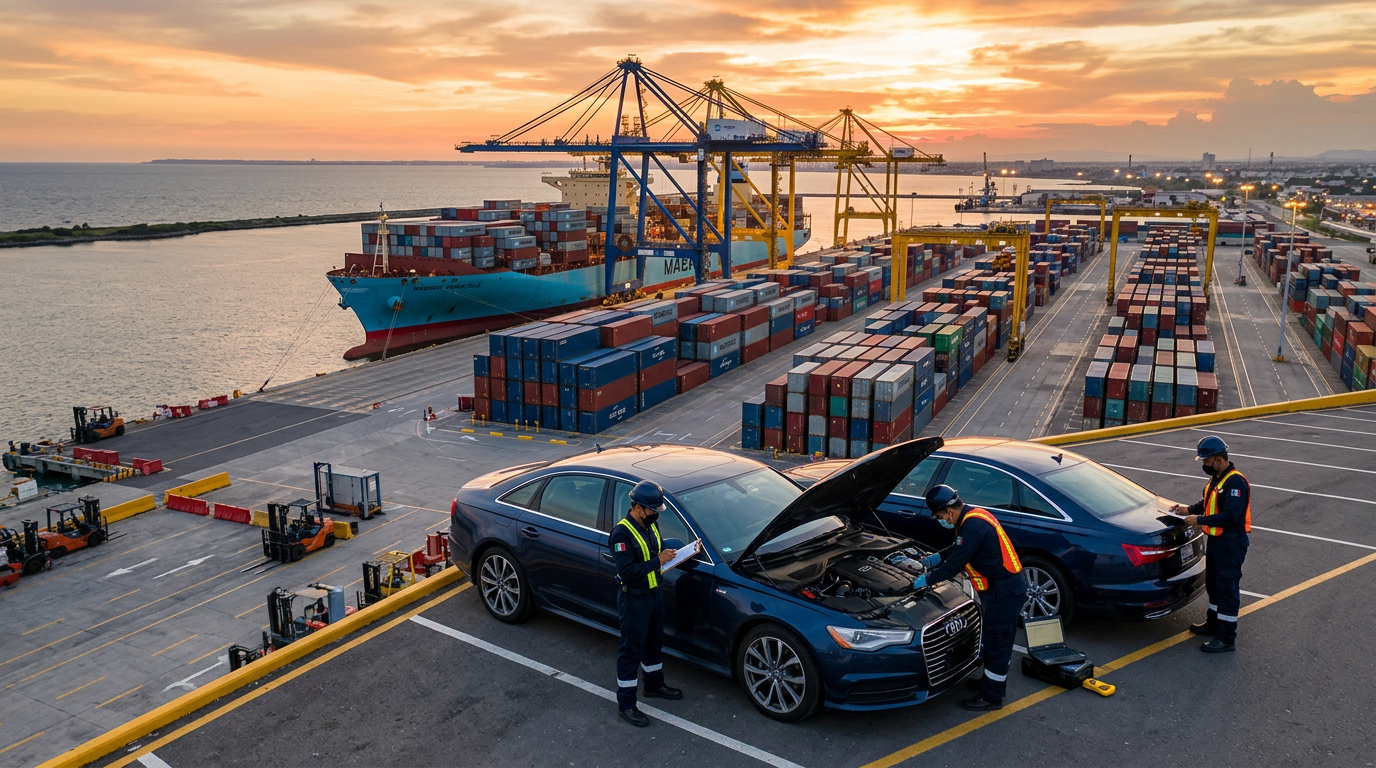
13 Jul How to Ship Your Vehicle in an International Move To or From Mexico: Options, Documents, and What to Know Before You Get a Quote
Shipping Your Vehicle in an International Move: More Than Logistics — It’s a Strategic Decision
When an international relocation is on the horizon, shipping personal belongings tends to take center stage: furniture, clothing, documents, valuables. Yet your vehicle is often one of the most complex — and most underestimated — assets involved in any international move to or from Mexico.
This isn’t simply a matter of getting a car from point A to point B. It involves customs clearance, specific permits, choosing the right transport method, transit times, and a chain of regulatory compliance that varies depending on the origin and destination countries. Making decisions without the right information can lead to delays, unexpected costs, or even having your vehicle held at customs.
With more than 75 years of experience in domestic and international relocation, IMS Movers has handled the shipping of all types of vehicles: everyday cars, classic and collector automobiles, work trucks, and high-value vehicles. What follows is a straightforward guide to help you arrive at your quote with the right information in hand.
Vehicle Transport Options for Your International Move
The first thing to determine is how your vehicle will be transported. Each method suits different conditions — distance, destination, budget, and vehicle type.
Ocean Freight
This is the most common method for intercontinental shipments. There are two main options:
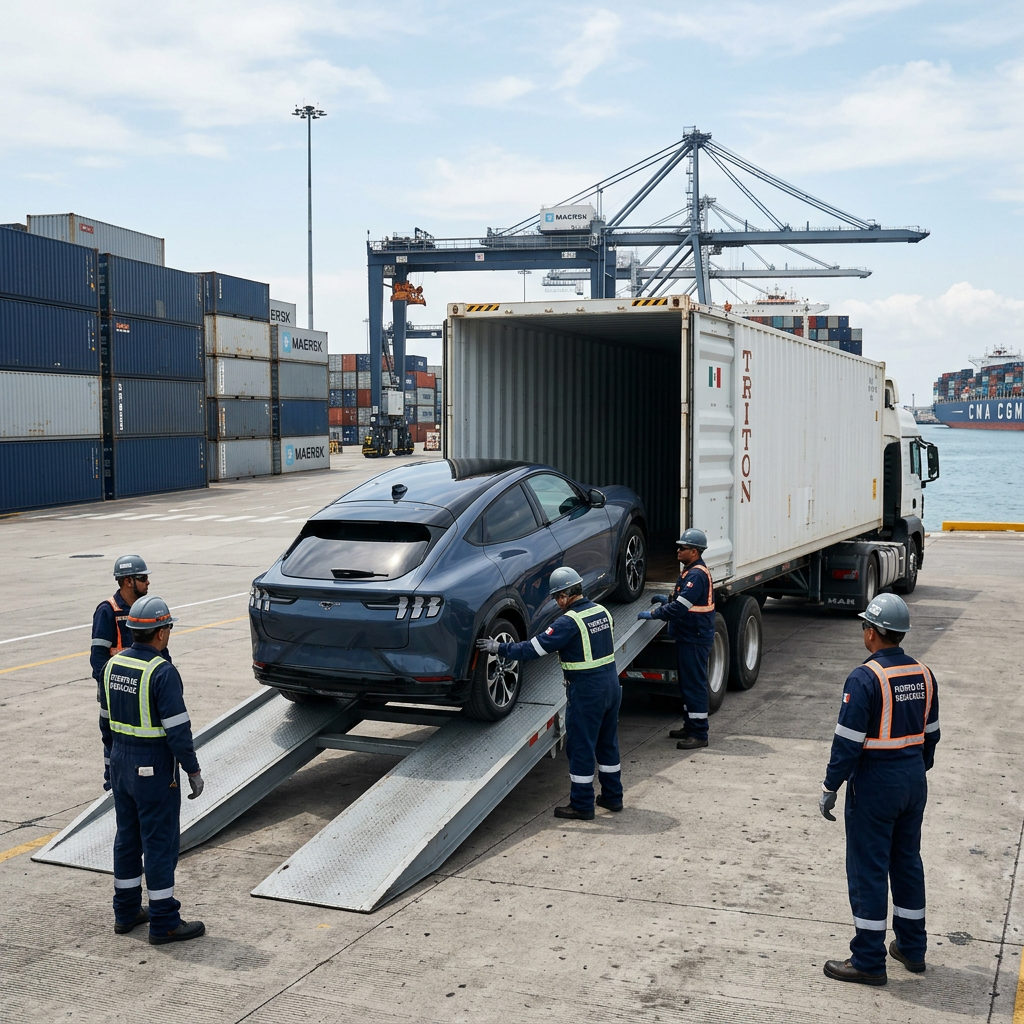
- Exclusive container (FCL): Your vehicle travels alone or alongside other belongings inside a sealed container. This provides greater protection and is the recommended choice for classic or high-value vehicles.
- RoRo (Roll-on/Roll-off): Your vehicle is driven directly onto the vessel and secured on deck. It’s a more affordable alternative, though it offers less protection from the marine environment.
Mexico’s main departure ports include Veracruz, Manzanillo, and Lázaro Cárdenas, with transit times ranging from 2 to 6 weeks depending on the destination.
Ground Transport
Applicable for moves to or from the United States and Canada. Vehicles can be shipped on enclosed or open carriers. Enclosed carriers are the standard choice for high-profile vehicles, as they minimize exposure to external elements throughout the journey.
Air Freight
Reserved for very specific situations: extreme urgency, exceptionally high-value collector vehicles, or cases where delivery time is a critical factor. It’s the most expensive option, but also the fastest and most controlled.
Essential Documentation for Shipping Your Vehicle
This is often where the most complications arise. Customs clearance for a vehicle in an international move requires precise documentation. While requirements vary by destination and origin country, there is a core set of documents that is almost always required:
- Original vehicle title or current registration document
- Official ID of the owner (passport or equivalent document)
- Temporary or permanent export or import permit, as applicable
- Proof of registration fees and taxes paid and up to date
- International insurance policy for the duration of the shipment
- Pre-existing damage report (vehicle condition report)
- Proof of residence in the destination country (for import processes)
In the specific case of Mexico, permanently importing a foreign vehicle requires compliance with regulations from the SAT and the Secretaría de Economía, as well as verifying whether the vehicle’s make and model year are eligible for import. These processes demand up-to-date knowledge of current regulations — something that an experienced logistics provider with an in-house customs team handles efficiently and with confidence.

What You Should Know Before Getting a Quote for Your Vehicle Shipment
Coming to a quote with clear information saves time, prevents last-minute adjustments, and lets you compare proposals on objective terms. These are the points you should have defined before reaching out to your moving service provider:
- Confirmed origin and destination countries. Each route carries its own regulations and costs.
- Vehicle type and specifications. Make, model, year, dimensions, and commercial or collector value.
- Estimated departure date. Ocean freight transit times require advance planning.
- Whether the vehicle shipment is part of a larger move. In many cases, consolidating your vehicle with the rest of your belongings into a single door-to-door service optimizes costs and simplifies coordination.
- Whether you need temporary storage at the destination. This is common in relocations where housing isn’t available immediately upon arrival.
The Difference of Working with a Proven, Experienced Operator
Shipping a vehicle as part of an international move is not a minor task. It’s a process that involves multimodal coordination, up-to-date customs expertise, and a chain of custody that must guarantee the integrity of your asset at every stage.
At IMS Movers, we operate with our own infrastructure and a network of affiliated companies that allow us to offer worldwide coverage with a high success rate. Our customs management team accompanies every process with precision — anticipating requirements and resolving issues before they impact your agreed delivery timeline.
Your relocation, on time and fully secure. That’s what more than 75 years of experience makes possible.
Planning to ship your vehicle as part of an international move to or from Mexico? Share the details of your relocation and receive a quote tailored to your situation. Get your moving quote today with IMS Movers.